admissions narrative
What Is a College Admissions Narrative—and Does Your Student Need One?
A college admissions narrative is not branding a teenager. Learn how authentic themes can help students make better high school decisions.

The short answer
A college admissions narrative is the connective tissue across a student’s experiences, interests, classes, projects, and activities. Used well, it is not a manufactured brand; it is a working framework that helps a student recognize patterns and make better decisions about what to explore or deepen next.
Narrative should not mean branding a teenager. It should make the next high school decision less arbitrary.
Narrative is most useful before the application—when it helps a student decide what to explore, deepen, or let go.
“Narrative” may be one of the most overused phrases in college admissions.
Parents hear: Your child needs a story. They need a spike. They need a theme. They need a personal brand.
That language can make a teenager sound like a marketing campaign.
We think that is the wrong way to use the idea.
Key takeaway: A narrative is not a brand. It is a framework for making decisions.
What does a college admissions narrative actually mean?
At its simplest, a narrative is the connective tissue between a student’s experiences.
What subjects repeatedly draw them in? Which activities give them energy? What questions do they keep returning to? What experiences have shaped their point of view? Where do seemingly unrelated interests intersect?
A student does not need one perfect answer.
The point is to notice patterns early enough that they can use them.
Why should narrative emerge instead of being invented?
Abby did not begin ninth grade saying: “My narrative will be the intersection of engineering, debate, and patent law.”
That would have been absurd.
She tried neuroscience. It was not for her. She moved toward engineering. She continued debate. Only after enough experience existed did a meaningful intersection begin to appear.
That is how narrative should work.
Abby’s narrative emerged from real exploration over time—it was not something invented before the experiences existed.
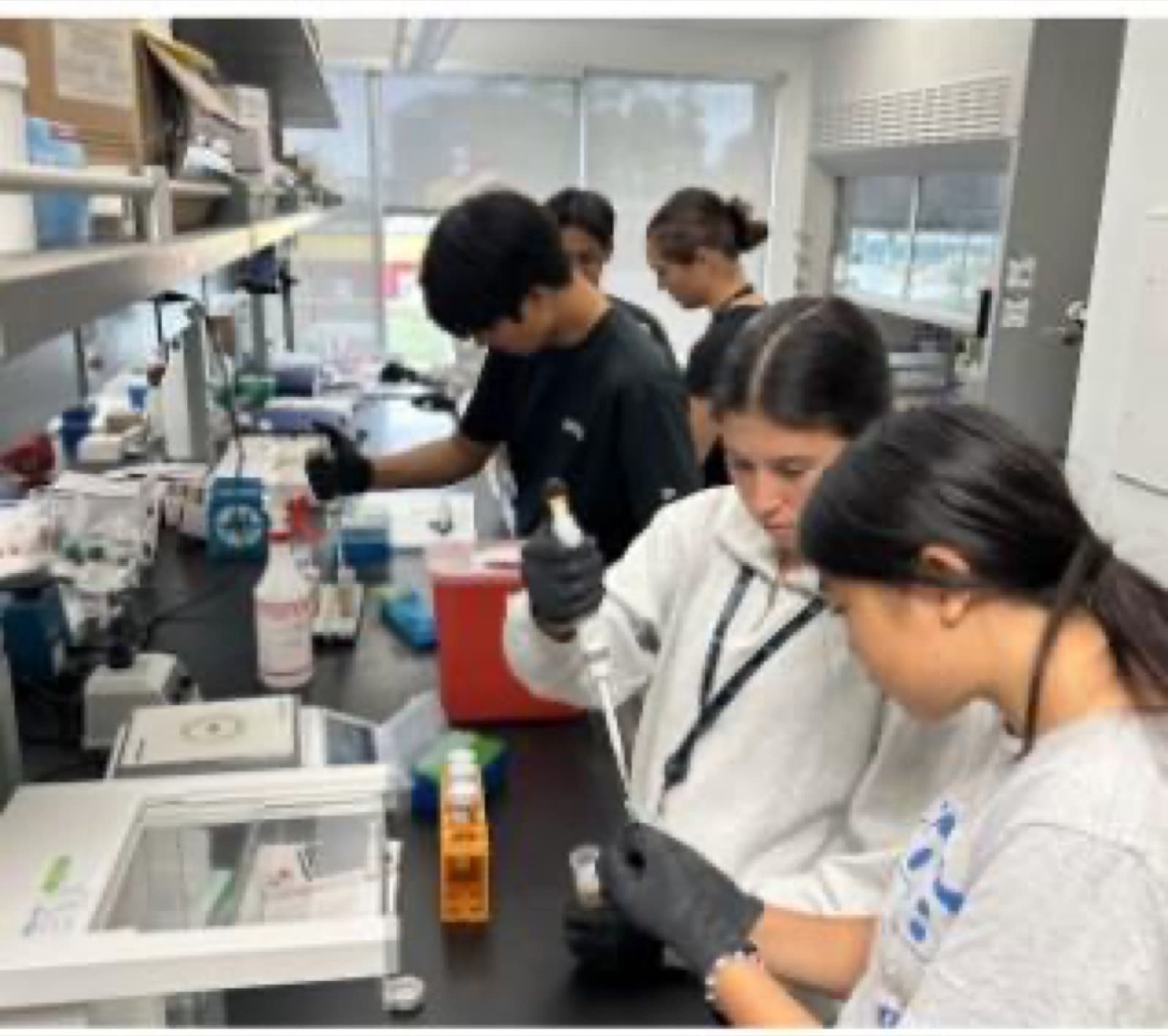
It is retrospective enough to be grounded in evidence and forward-looking enough to guide the next choice. That is the same pattern as standing out without doing more.
Why narrative matters before the application
Most people think about narrative when essays start.
That is too late to get the full value from it.
The more powerful use is earlier.
Imagine a student trying to decide between three summer programs. Without any framework, every option feels potentially important. The student asks: Which one looks best? Which one is more prestigious? What would colleges prefer?
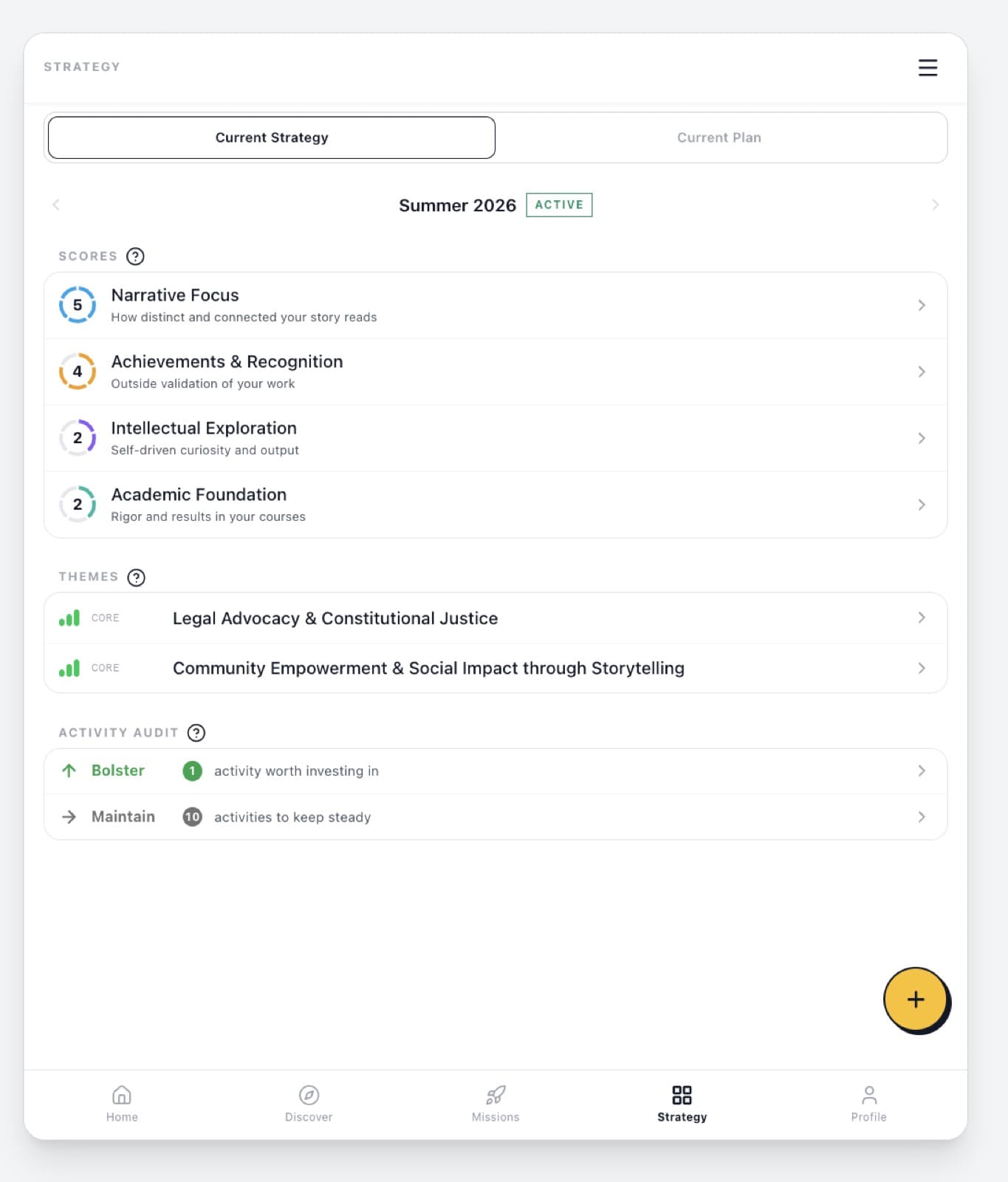
With Narrative Threads, the questions become better: Which one connects most strongly to what I have discovered I care about? Which fills a gap? Which lets me test an emerging interest? Which builds on work I have already started?
Now narrative is doing something useful.
It is reducing noise.
FlightPlan surfaces Narrative Threads alongside the student’s scores and activity audit so themes can inform real decisions—not just application storytelling.
Is a student allowed to change their narrative?
Absolutely.
Teenagers change. That is not a flaw in the system. It is the point of high school.
A ninth grader interested in “climate” may eventually realize they are most excited by marine biology, policy, sustainable engineering, or journalism.
A student fascinated by aviation may move toward aerospace engineering, economics, physics, entrepreneurship, or transportation policy.
Themes should be working hypotheses, not permanent labels.
The danger is not changing direction. The danger is constantly changing direction before anything has enough time to become meaningful.
That is also why when you start preparing for college matters: freshman year can explore, sophomore year can select, and later years can substantiate what is actually emerging.
What makes a strong Narrative Thread?
A useful Narrative Thread has evidence behind it. It appears across more than one part of the student’s life. And it helps them make a choice.
For example, a student loves debate, writes about constitutional issues, volunteers around civic participation, and consistently chooses history and government topics for independent work.
A theme around legal advocacy or civic engagement may be emerging.
That does not mean the student must become a lawyer. It means there is enough signal to say: This is worth exploring more deeply.
A passion project can reinforce that thread when it grows from work the student is already doing. So can extracurriculars that show depth rather than a longer list.
The application is the final output, not the starting point
By senior year, an admissions reader may see the student’s courses, activity descriptions, awards, recommendations, essays, and experiences. Ideally, those things make sense together.
But coherence is strongest when it comes from the student making authentic decisions over time—not from somebody sitting down in August before senior year and reverse-engineering a theme.
That is why FlightPlan identifies Narrative Threads much earlier in the process.
We look across the student’s classes, activities, projects, interests, and experiences to understand what is already emerging, what might be worth strengthening, and where the student may simply be spending time because they think they are supposed to.
The question is not: “How do we package this student?”
It is: “What is this student telling us about who they might be becoming?”
That is a much more interesting question—for college and for life.
Firsthand FlightPlan and Curious Cardinals experience; student examples; event-derived positioning. Updated August 17, 2026.
Quick answers
Questions answered
What is a college admissions narrative?
It is the pattern that connects a student’s choices, interests, experiences, and contributions. A good narrative is grounded in what the student has actually done rather than invented for an application.
Does every college applicant need a spike?
No. Students do not need to manufacture a single narrow identity. Coherence can come from several connected interests, values, or ways of engaging with the world.
When should students think about their narrative?
Well before application season—but as a flexible decision framework, not as a fixed personal brand. Themes can help students choose what to explore or deepen over time.
Can a student change interests during high school?
Yes. Exploration and course-correction are healthy. The goal is to learn from those changes and eventually give promising interests enough time to develop depth.
Keep exploring
Related guides

admissions strategy · Aug 17, 2026
How to Stand Out in College Admissions Without Doing More
Learn why standout college applicants focus on depth, impact, and authentic interests—not more activities—and how to build a smarter high school strategy.
Read guide
passion projects · Aug 17, 2026
Do You Need a Passion Project for College Admissions?
A passion project alone will not make a college application stand out. Learn what actually makes a high school project meaningful.
Read guide
planning by grade · Aug 17, 2026
When Should You Start Preparing for College? A Grade-by-Grade Guide
Learn what freshmen, sophomores, juniors, and seniors should focus on for college—and why starting early can actually reduce pressure.
Read guide