passion projects
Do You Need a Passion Project for College Admissions?
A passion project alone will not make a college application stand out. Learn what actually makes a high school project meaningful.
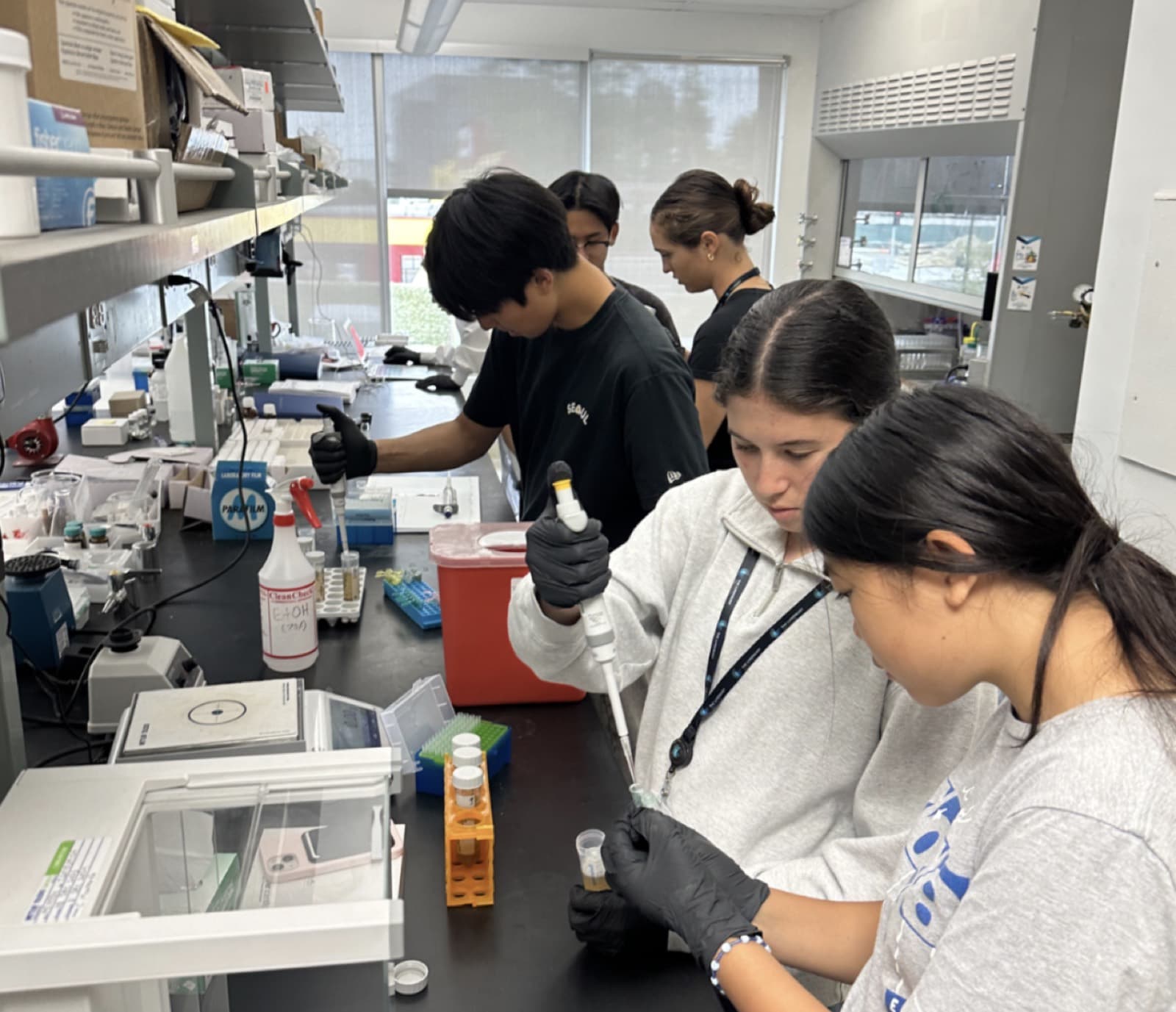
The short answer
No, students do not need a “passion project” simply to check a college admissions box. Projects become valuable when they grow from a real interest and show sustained effort, originality, meaningful impact, and—in some cases—external recognition or evaluation.
A project can be valuable. The label “passion project” is not what makes it meaningful.
The strongest projects are usually grounded in a real question or interest and become more sophisticated through sustained work.
One of the most common questions we hear from families is:
“Does my child need a passion project?”
No. At least, not in the way the internet often talks about them.
A student does not become compelling because they can say: “I started a nonprofit.” “I conducted research.” “I built an app.” “I launched a podcast.”
Those are formats. They are not evidence of meaningful work.
The better question is: Has my student found something they care about enough to pursue deeply?
How did “passion project” become another checkbox?
The original idea behind a passion project is a good one. Students should have opportunities to pursue curiosity beyond what is assigned in school.
But somewhere along the way, “passion project” became another admissions checkbox.
Students begin asking: What project looks impressive? What nonprofit should I start? What topic should I research?
The result is often work that is technically student-led but emotionally hollow.
Admissions aside, teenagers can tell when they are doing something they do not care about. They rarely do their best work there.
What actually makes a project meaningful?
From the students we have worked with, four qualities matter far more than whether something gets called a passion project.
Sustained effort
Did the student work on it long enough to encounter real problems, change direction, and improve?
Originality
Does the project reflect something specific about the student’s interests, experience, or perspective?
Impact
Did somebody actually benefit from the work? Did anyone use it, read it, attend it, adopt it, or learn from it?
Recognition
Was there an opportunity for the work to be evaluated or validated externally?
These qualities are much harder to manufacture in a weekend. And that is the point.
Why creating something is no longer enough
AI has made it easier than ever to create things. A student can build a basic website, generate code, produce images, or draft an article remarkably quickly.
That makes the existence of an artifact less meaningful on its own.
The more useful question becomes: What did the student do with it?
Ten thousand people may try a tool once. Or ten people may depend on it every week. Those tell very different stories.
A research paper may exist. Or it may become the basis for a submission, competition, presentation, further experiment, or conversation with an expert.
A nonprofit may have an Instagram account. Or it may receive a grant, build a program, partner with an organization, and demonstrate sustained outcomes.
Key takeaway: Creating something is increasingly easy. Making something matter is harder.
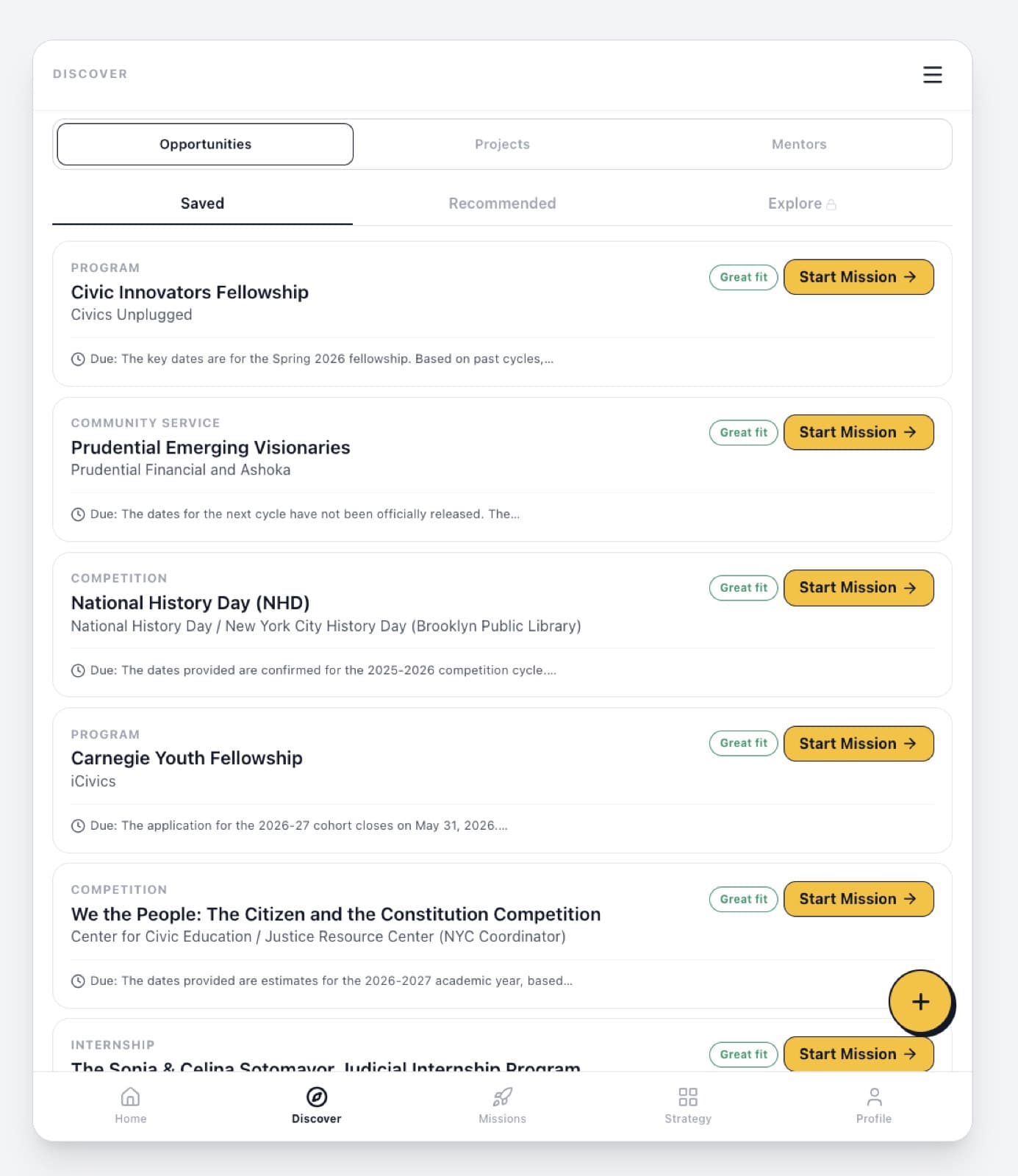
The next step often is not “start a project.” It is finding the right program, competition, publication, internship, or external opportunity for work already underway.
Start with the student, not the project
Suppose a student loves aviation.
The wrong question is: “What passion project should an aviation kid do?”
The better questions are: What specifically about aviation fascinates them? Engineering? Physics? Safety? Data? Pilot behavior? Environmental impact? Airport design? Policy?
Once you know that, the possibilities become much more authentic.
One student working with FlightPlan had already built an aviation simulator. Through conversation, an idea emerged to analyze telemetry data from flights around a nearby airport and build a public-facing way to explore the information.
The project grew from something he was already doing.

That is very different from randomly assigning him a nonprofit because “leadership looks good.”
This is the same pattern as standing out without doing more: depth comes from work the student actually wants to continue.
Sometimes the project already exists
One of the biggest mistakes families make is assuming the student needs something new.
Often the opportunity is hidden inside what they are already doing.
If your student writes for the school newspaper, the next step may be external publication or competition. If they build rockets, the next step may be a challenge or engineering competition. If they volunteer, the next step may be ownership of a meaningful problem inside the organization. If they conduct research, the next step may be publication, presentation, or extension.
The goal is not always: “Start.”
Sometimes it is: “Take this further.”
That is also why what extracurriculars actually matter is a better starting question than “what project should we invent?” A strong project can then reinforce an emerging college admissions narrative.
A project should create a better student, not just a better application
This is ultimately the standard we care about most.
Did the student learn to deal with ambiguity? Did they figure out what they liked? Did they persist through frustration? Did they learn how to ask better questions? Did they create something that mattered to someone besides themselves?
If yes, the project has already succeeded.
And if that becomes meaningful evidence in a college application later, all the better.
Do not manufacture a passion project. Build a body of work worth being proud of.
If you are still deciding when a project is useful, start with the grade-by-grade planning guide. Freshman year is for exploration. Junior year is a poor time to invent an identity from scratch.
Firsthand FlightPlan and Curious Cardinals experience; student examples; event-derived positioning. Updated August 17, 2026.
Quick answers
Questions answered
Do colleges require passion projects?
No. A passion project is not a formal admissions requirement. It can be useful when it reflects authentic curiosity and leads to meaningful work.
What makes a passion project impressive?
Sustained effort, originality, real impact, and external evaluation or recognition can make a project more meaningful than the project label itself.
Is starting a nonprofit a good passion project?
It can be, but starting a nonprofit is not inherently valuable. The important questions are what problem it solves, who benefits, whether the work is sustained, and what real outcomes result.
What if a student does not know their passion yet?
That is normal. Early high school can be used to explore several interests, notice which experiences create energy, and gradually choose where deeper work makes sense.
Keep exploring
Related guides

admissions strategy · Aug 17, 2026
How to Stand Out in College Admissions Without Doing More
Learn why standout college applicants focus on depth, impact, and authentic interests—not more activities—and how to build a smarter high school strategy.
Read guide
extracurriculars · Aug 17, 2026
What Extracurricular Activities Actually Matter for College?
There is no single “best extracurricular” for college. Learn how depth, impact, authenticity, and recognition make activities meaningful.
Read guide
admissions narrative · Aug 17, 2026
What Is a College Admissions Narrative—and Does Your Student Need One?
A college admissions narrative is not branding a teenager. Learn how authentic themes can help students make better high school decisions.
Read guide