Comparison
FlightPlan vs. ChatGPT vs. a College Counselor: What’s the Difference?
Compare FlightPlan, ChatGPT, and traditional college counseling for high school strategy, opportunities, personalization, and accountability.

The short answer
ChatGPT is a powerful general-purpose assistant, and a college counselor can provide valuable human judgment and relationships. FlightPlan is designed as a dedicated, always-available strategy and accountability system that builds context about the student over time, uses admissions-specific data and curated opportunities, and proactively helps the student execute between human touchpoints.
The question is not which tool can answer a question. It is which system helps the student make better decisions and follow through.
FlightPlan is designed as a strategic layer around the student—not as a replacement for the human relationships already helping them grow.

Sky is built to be an always-available strategic and accountability layer rather than a blank general-purpose chat experience.
As soon as parents see FlightPlan, we hear two questions:
“Why couldn’t my student just use ChatGPT?”
and:
“Is this supposed to replace a college counselor?”
The answer to both is the same:
They are different tools designed to solve different problems.
What is ChatGPT good at for college planning?
General-purpose AI is extraordinarily capable.
If a student asks for twenty summer programs in neuroscience, it can generate ideas. If they ask for brainstorming help, it can brainstorm. If they ask how to write a cold email, it can help.
But there is a structural limitation:
The student has to know what question to ask.
Most ninth and tenth graders do not.
They do not know that their activities will eventually have to be summarized and prioritized in the Common App. They do not know which gaps in their profile matter. They may not know that the article they already wrote could be submitted to a competition.
They do not know what they do not know.
That is why FlightPlan is designed to be proactive rather than reactive.
FlightPlan starts with a student model—not a blank chat box
The difference begins with context.
FlightPlan builds a structured understanding of the student: their high school, courses, activities, interests, goals, projects, awards, target colleges, evolving Narrative Threads, Missions, and history over time.
That allows the system to say something very different from: “Here are 25 good extracurriculars.”
It can say: Based on what you are already doing, the themes we see, the gaps in your current profile, your location, your age, and your goals, these opportunities are more strategic for you.
That is how FlightPlan executes the strategy in How to Stand Out in College Admissions Without Doing More.
What data makes FlightPlan different?
FlightPlan was designed around college and high school strategy.
Its strategy layer draws on admissions-specific inputs such as Common Data Sets, high-school context, public admissions materials and guidance, patterns from the Curious Cardinals ecosystem, and a curated opportunity database.
The Scorecard looks across four dimensions: Academic Foundation, Intellectual Exploration, Achievement & Recognition, and Narrative Focus.
The purpose is not to predict admission.
It is to provide a structured diagnostic: Where are you strong? Where are you underdeveloped? What can you do about it?
Key takeaway: A dedicated system is most useful when it remembers the strategy, not just the last prompt.
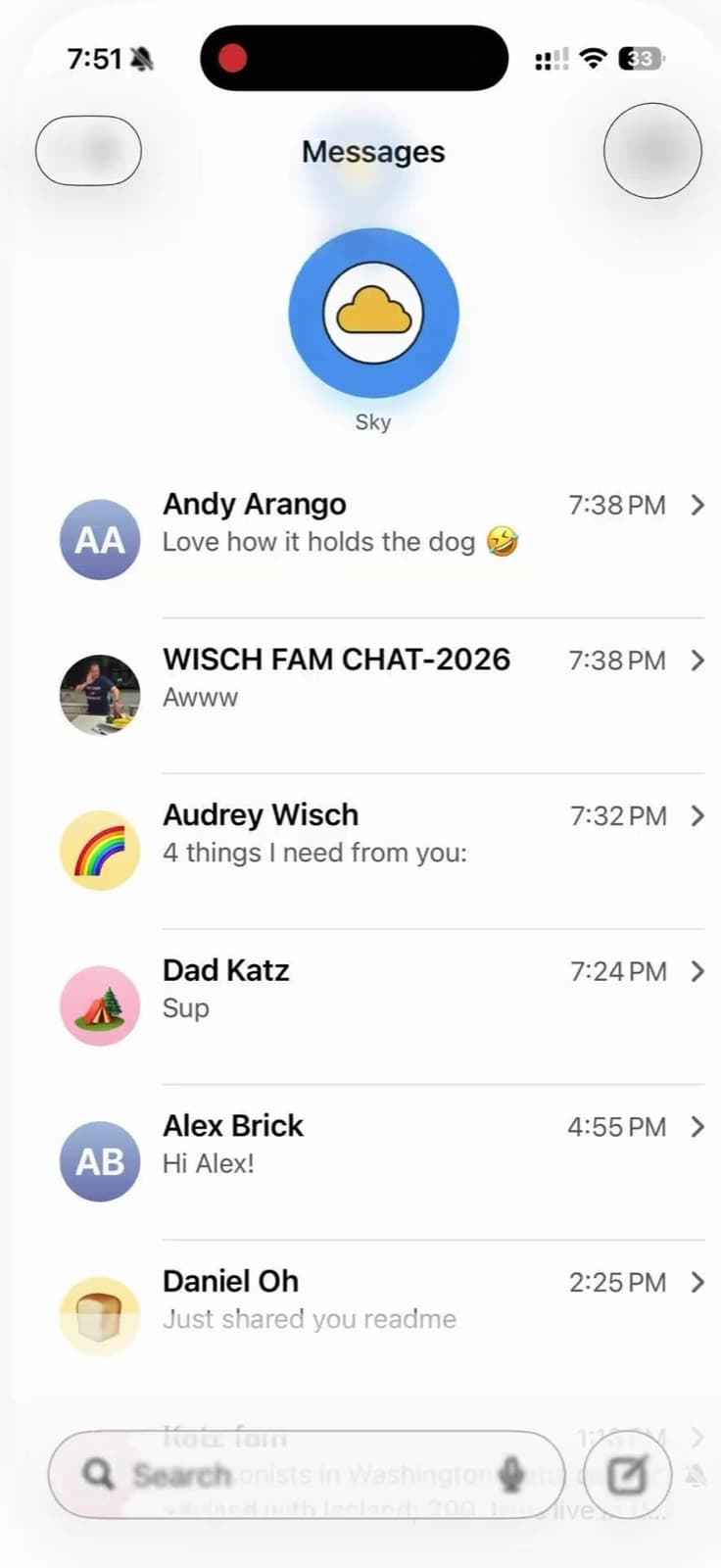
FlightPlan also meets students in familiar channels, including text, so questions and accountability can happen between formal sessions.
Why memory and continuity matter
A student may decide in September that their priorities are to deepen a robotics project, apply to one summer program, and improve a community tutoring initiative.
Those decisions should still matter in October. And November.
A general conversation can provide a good answer today.
FlightPlan is designed to retain the plan and keep helping the student execute against it.
The value compounds as the student adds more context over time. By the time applications eventually arrive, the system has not just met the student. It has watched the work develop.
What does “proactive” mean in practice?
A teenager often does not need one more answer.
They need to do the thing.
That is why Missions break a larger goal into concrete steps. And why Sky checks in week over week: What got done? What got in the way? What should happen next? Does the plan need to change?
As we often tell students: If something feels overwhelming, the first step probably is not small enough.
That execution layer is a major part of what makes FlightPlan different. It is also why starting earlier can reduce pressure: the system can hold a grade-appropriate plan instead of asking the student to reconstruct it every week.
Is FlightPlan a replacement for a college counselor?
Not necessarily.
A great college counselor can be enormously valuable. They bring judgment, experience, human nuance, and a relationship.
FlightPlan is not built to make trusted adults irrelevant. In fact, one of our principles is explicitly: A tool, not a relationship.
The difference is frequency and function.
A counselor may meet with a student monthly, quarterly, or during key stages. FlightPlan is available between those moments. The student can use it to execute the strategy, find opportunities, track activities, ask questions, and remain accountable.
That can also make counselor or mentor time more useful.
Instead of spending a meeting reconstructing what happened over the previous month, the student can arrive with: Here is my strategy. Here is what I tried. Here is where I got stuck. Here is the decision I need help making.
The activity side of that strategy is often an extracurricular audit: what to Bolster, Maintain, or Cut before adding more.
What about a mentor?
Mentors are particularly useful when a student needs inspiration, tactical skill-building, subject expertise, or a person they admire.
One example from our FlightPlan launch involved a student interested in aviation. FlightPlan helped shape a project idea involving aviation data. But the student realized they needed coding help to build it.
That is where a human mentor could be especially valuable.
FlightPlan provides the strategic scaffold. A mentor can help the student develop the skill required to execute it.
So which should a family use?
It is not necessarily either/or.
Use ChatGPT when you want a capable general-purpose AI assistant.
Use a counselor when you want human admissions judgment and a relationship.
Use a mentor when a student needs inspiration, expertise, or hands-on guidance.
Use FlightPlan when you want an always-available system that understands the student, helps determine what matters, identifies opportunities, builds the plan, and follows up until the work gets done.
The question is not: Which tool can give me an answer?
It is: Which system will help my student make better decisions over the next several years—and actually follow through?
Approved FlightPlan positioning; product-specific claims; event-derived explanation of the product and human-support model. Updated August 17, 2026. Facts last reviewed August 17, 2026.
Quick answers
Questions answered
Can ChatGPT help with college admissions?
Yes. It can help brainstorm, explain concepts, edit writing, generate questions, and research general ideas. A general-purpose assistant is most useful when the student already knows what they need help with.
Is an AI college planning tool a replacement for a counselor?
Not necessarily. A dedicated AI tool can provide data, continuity, opportunity discovery, and frequent accountability, while a counselor provides human judgment, context, and a relationship.
How is FlightPlan different from a college counselor?
FlightPlan is designed to be available between counselor meetings, remember the student’s evolving strategy, surface personalized opportunities, and help turn long-term goals into weekly execution.
How is FlightPlan different from a mentor?
A mentor can provide inspiration, domain expertise, skill-building, and a human relationship. FlightPlan is the strategic and accountability layer that can help determine what the student should focus on and how to keep moving between sessions.
Keep exploring
Related guides

admissions strategy · Aug 17, 2026
How to Stand Out in College Admissions Without Doing More
Learn why standout college applicants focus on depth, impact, and authentic interests—not more activities—and how to build a smarter high school strategy.
Read guide
planning by grade · Aug 17, 2026
When Should You Start Preparing for College? A Grade-by-Grade Guide
Learn what freshmen, sophomores, juniors, and seniors should focus on for college—and why starting early can actually reduce pressure.
Read guide
extracurriculars · Aug 17, 2026
Too Many Extracurriculars? How to Decide What to Keep, Drop, or Double Down On
Learn the Bolster-Maintain-Cut framework for deciding which high school extracurriculars deserve more time—and which do not.
Read guide